
Eve Ensler and Ariel Orr Jordan
The Vagina MonologuesThis flow traces how Ariel Orr Jordan’s belief and tenderness help Eve Ensler turn private interviews into a theatrical work and sustain its demanding public life.
increasing Bearing strength in each event
 decreasing
Bearing strength in each eventdecreasingA Private Search
A Search for Connection
Before the Work Took Shape
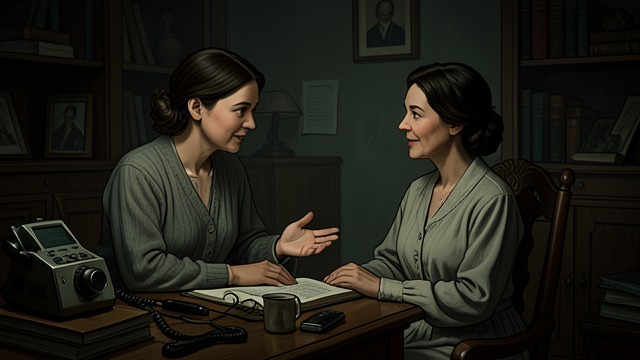
Eve Ensler describes longing to find her way back into her own body, while the first conversations about women’s genitals begin as intimate, informal exchanges. Her relationship with Ariel Orr Jordan belongs to this early private world: a partnership in which difficult subjects can be spoken aloud before they become public performance.
A Partner’s Recognition
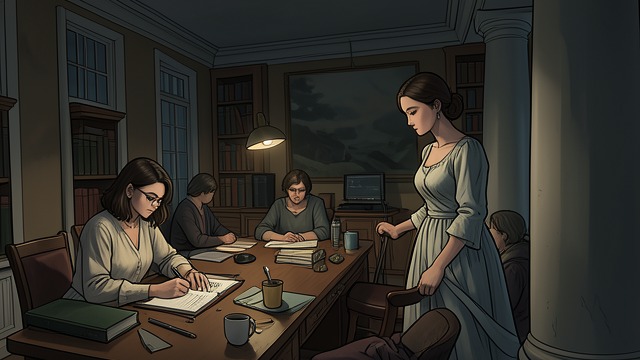
The work does not arrive as a fully planned project. Ensler interviews women while occupied with another play, and the material gathers its own force. Jordan recognizes that these conversations deserve more than a place at the edge of Ensler’s writing life and encourages her to take the emerging work seriously.
That encouragement matters because Ensler herself remains uncertain about the project’s shape and ownership. The relationship gives the work a witness and an advocate before it has a settled form, making private attention the first condition of its public voice.
Taking the Work Seriously
From Confidence to Commitment
Jordan’s Intervention
As interviews begin producing vivid stories, Ensler does not yet treat them as a complete theatrical undertaking. Ariel Orr Jordan helps her conceive the piece and make a plan, providing practical structure where Ensler experiences something more instinctive than deliberate authorship.
Shared Creation
Ensler recalls suspecting that Jordan was somehow on the payroll of the Vagina Queens, a playful way of describing how the work seemed to recruit the people closest to it. Beneath the joke is an acknowledgment of Jordan’s active role: the partnership helps transform scattered conversations into a performance that can be carried into a room.
The creative bond is not presented as a simple division of tasks. Jordan’s belief gives Ensler permission to follow material that feels larger than her intentions, while Ensler’s willingness to perform it gives their shared conviction a form audiences can encounter.
The Protected Stories
A Partner Behind the Performer
A Demanding Ritual
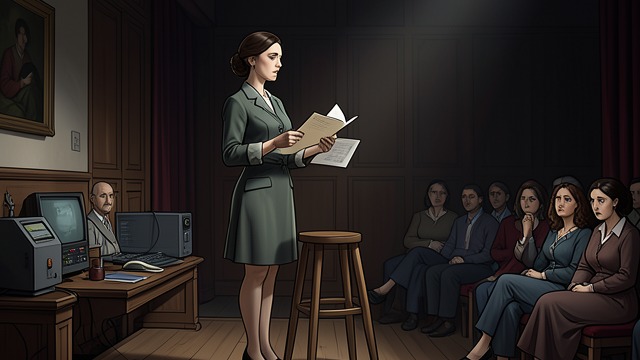
In the first years of performing, Ensler describes needing a high-backed stool, a microphone, note cards, and particular shoes. Even after memorizing the material, she holds the cards as if the women who entrusted her with their stories must remain present beside her.
Jordan’s Place in the Work
This performance is emotionally demanding because Ensler experiences herself less as a detached entertainer than as a guardian of intimate testimony. Her partnership with Ariel Orr Jordan forms part of the personal support surrounding that responsibility, even as the audience sees Ensler alone onstage.
The relationship’s significance lies in the difference between visible performance and unseen sustaining care. The play’s public life depends on someone helping Ensler keep returning to stories that expose pain, desire, and shame without treating them as material to be casually spent.
A Life Beside the Movement
Sharing the Consequences
The Work Expands
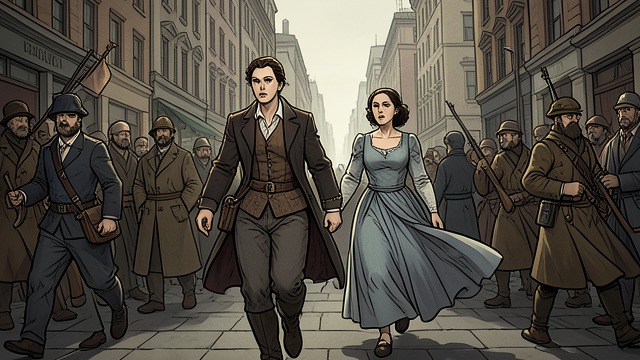
After the play gives rise to V-Day, Ensler’s life becomes entangled with an expanding movement against violence toward women. Performances, organizing, travel, and the testimony of survivors extend the work far beyond its beginnings as a collection of interviews.
Partnership Under Pressure
Ensler describes showing up, exercising, and trying to stay out of the way as the Vagina Queens do the rest. That lightness sits beside the relentless seriousness of the work. A close partner’s steadiness matters in a life increasingly shaped by public demands and emotionally weighty encounters.
The partnership is therefore more than an origin story for a play. It is part of the private ground from which Ensler can enter a movement whose urgency repeatedly exceeds any one performance or personal schedule.
Tenderness at the Beginning
The Relationship Remembered
Naming the Partner
In her acknowledgments, Ensler thanks Ariel Orr Jordan as the partner who co-conceived the piece with her. She describes Jordan’s kindness and tenderness as a salve, language that places emotional care alongside the practical work of helping the play find its form.
A Lasting Origin
The acknowledgment makes clear that the work’s apparent singular authorship rests within a relationship. Jordan’s contribution is neither reduced to inspiration nor separated from the creation of the piece; Ensler remembers a shared beginning and a companion whose care helped make that beginning bearable.
The thread resolves not with a claim that the partnership explains everything, but with a recognition of intimacy as creative infrastructure. The public work carries traces of a private bond built from belief, collaboration, and tenderness.
Before the interviews became a play
During the formation of the early monologues
During the first years of performance
After V-Day began in 1998
At the close of the acknowledgments
